No Tribe space
No Tribe

No Tribe

Building ecosystems of competent, trustworthy leaders — city by city, starting in Washington, D.C.

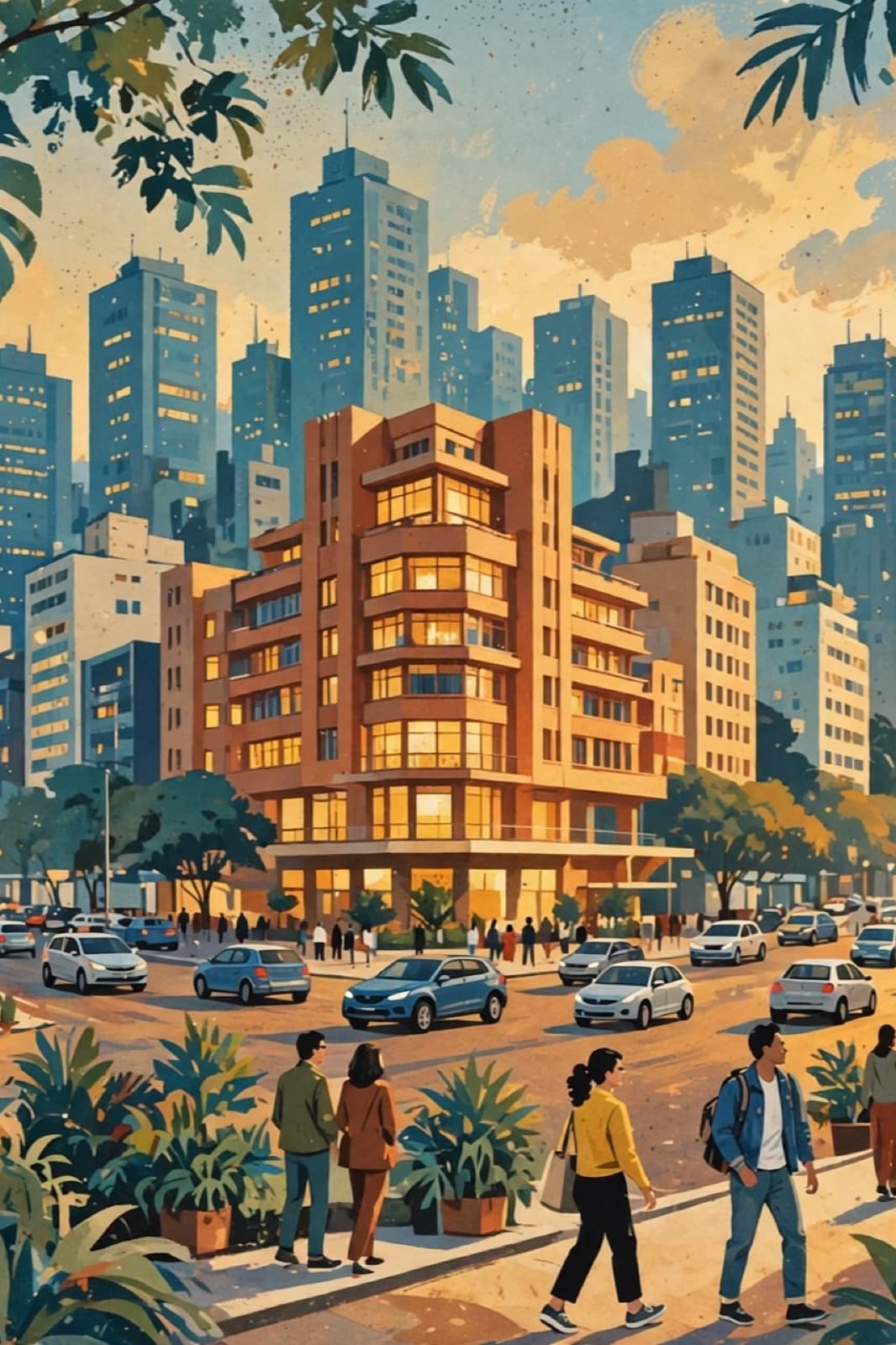
City streets
01

Chapter 01

Why Leadership

The single variable that determines whether communities thrive

01

Why Leadership Matters

The Most Important Variable

Leadership is the single most important variable in whether a community thrives. It matters at every level — in governments, in organizations, in neighborhoods, in families. When competent, trustworthy people lead, good things happen.

This is not a controversial idea. It is an observable pattern, repeated across history. Great institutions are built by competent, trustworthy leaders. Great communities are shaped by people who care deeply and lead with integrity.

And these leaders already exist — everywhere. In every neighborhood in Washington, D.C., there are people doing remarkable work. The nonprofit director stretching a shoestring budget into real impact. The teacher staying late to tutor the students others have given up on. The community organizer who knows every family on the block by name. They are out there, and they are already making a difference.

Imagine what becomes possible when these leaders finally find each other.

Right now, most of these leaders are operating in isolation. The shelter director in Ward 7 has never met the mental health advocate in Ward 4 — even though they share the same population, the same funding landscape, and many of the same challenges. The education innovator in Southeast has no connection to the workforce development leader in Northwest.

The opportunity here is enormous. Leadership is not just about individual competence — it is about coordination, mutual support, and the compounding effect that happens when good people work together. Ten connected leaders can have more impact than a hundred working alone.

What if the best leaders in a city — across every sector — actually knew each other? What if they supported one another, shared what they were learning, and coordinated their efforts? That is the possibility No Tribe is built around.

Leaders in coordination
Coordination is the missing ingredient in civic leadership
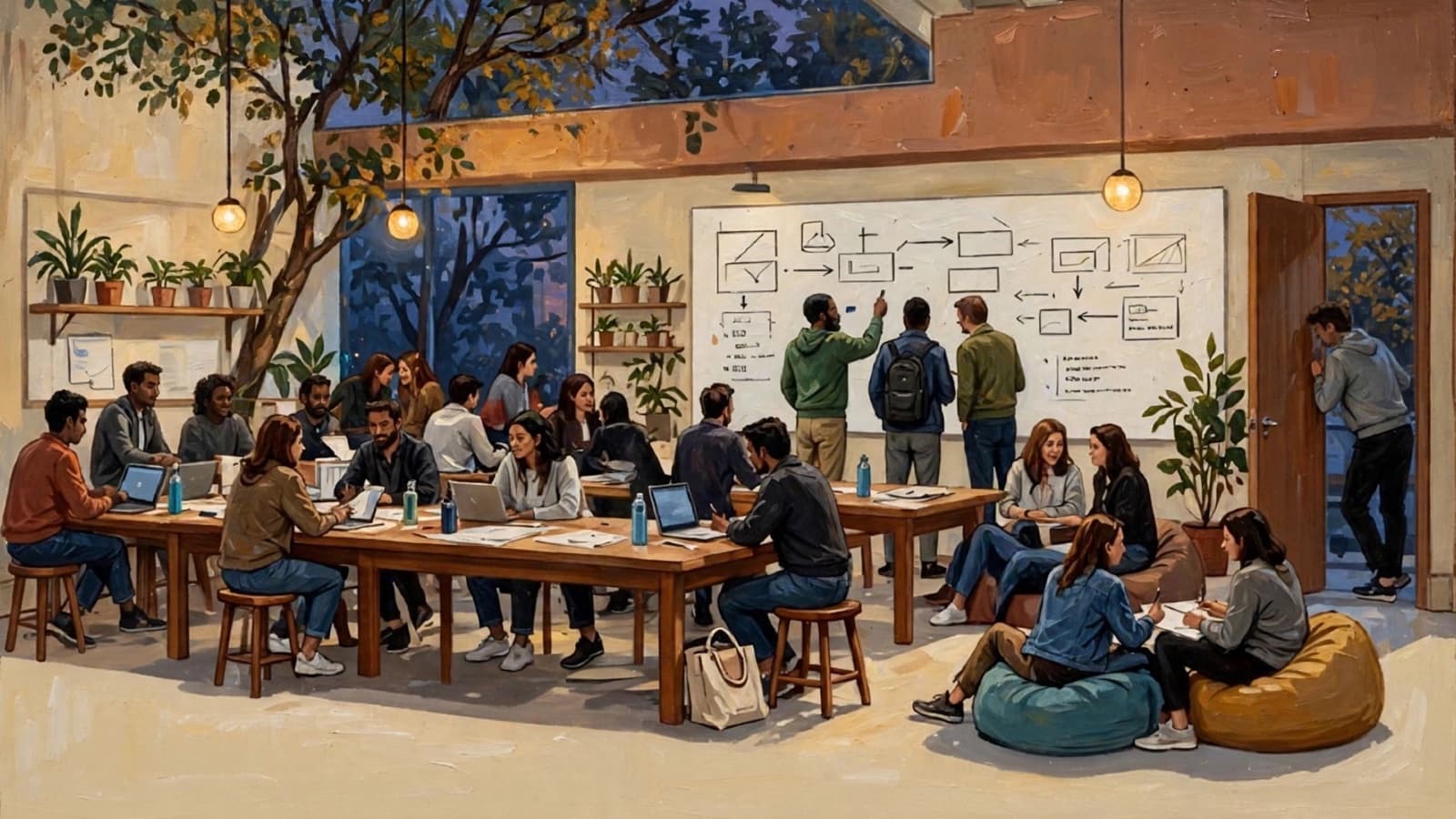
People connecting joyfully
02

Chapter 02

The Vision

An ecosystem where leaders find each other and multiply their impact

02

The No Tribe Ecosystem

Three Layers of Impact

No Tribe is building something that does not yet exist: a complete ecosystem for civic leaders. Not a networking group. Not a conference circuit. Not another LinkedIn community. A living, breathing infrastructure that finds the best leaders in a city, connects them, supports them, and develops the next generation.

The core insight is deceptively simple: a small number of coordinated, high-integrity leaders can transform an entire city. Like a force multiplier — when the right people are connected and working together, the impact is exponential, not linear. You do not need to change millions of minds. You need to connect the right hundred leaders.

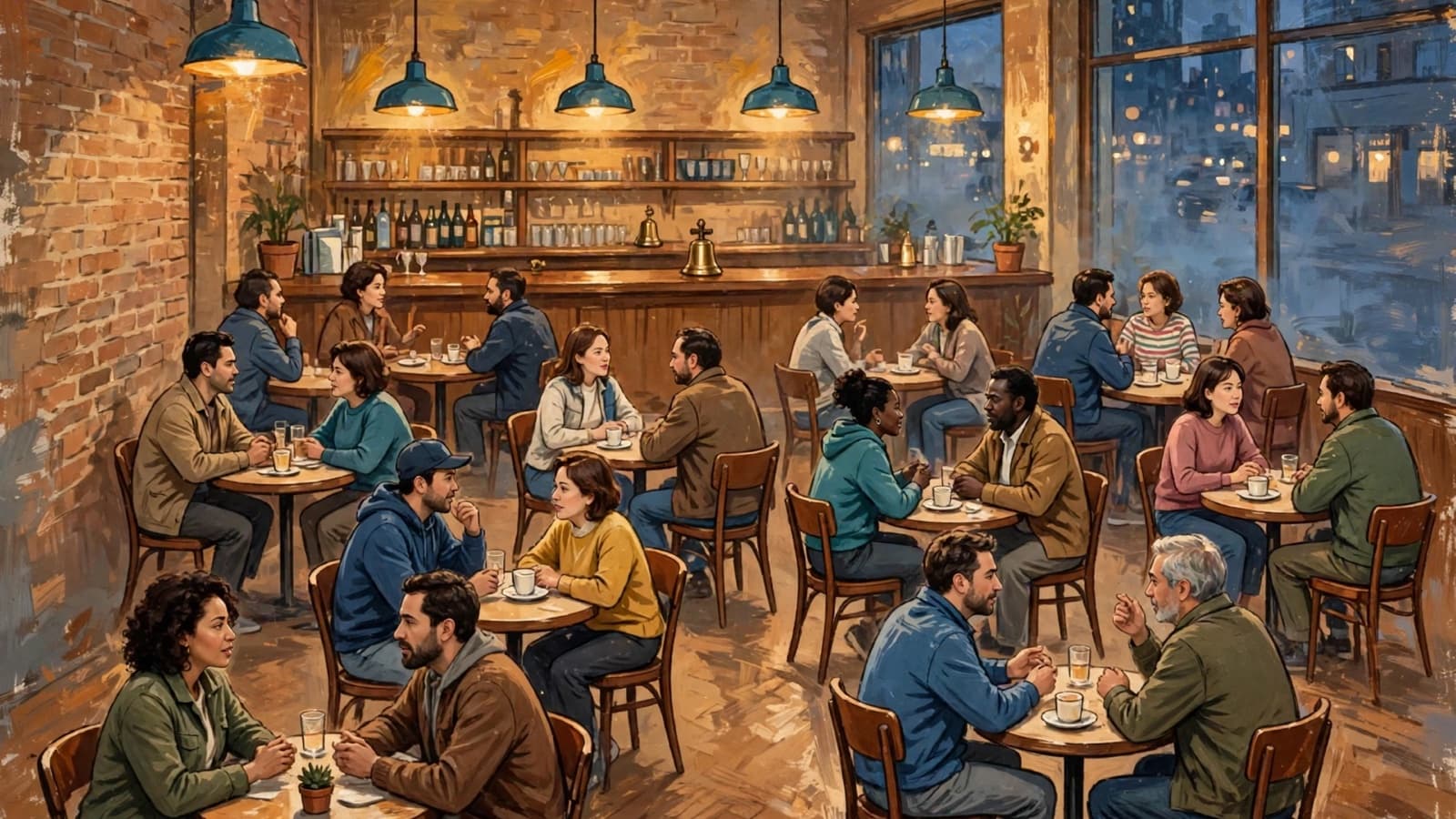
Community connection
Trust built through authentic connection

A small number of coordinated leaders can transform an entire city — like a force multiplier for good.

The No Tribe ecosystem has three layers. At the base are communities of practice — small, recurring groups of practitioners in specific verticals (homelessness, education, youth development, public health, and more) who meet regularly to share knowledge and solve problems together. These communities are the foundation: they create trust, surface insights, and identify talent.

The middle layer is the cross-sector network — the connective tissue that links leaders across verticals. When a housing expert meets an education leader, new solutions emerge that neither could have imagined alone. When a tech entrepreneur meets a social worker, resources flow to where they're needed most.

The top layer is the Academy — a physical space and intensive program for the most exceptional leaders. Part social impact club, part leadership development institute, part incubator for ideas that could change a city. The Academy is the destination, but the journey to get there is where the transformation really happens.

Collaborative activity
Cross-sector collaboration in action
Movie night
Community built through shared experience
Community dinner
03

Chapter 03

Phase One: Gather

Potluck dinners, borrowed spaces, and the radical act of showing up

03

2026 · Phase One

Start With What You Have

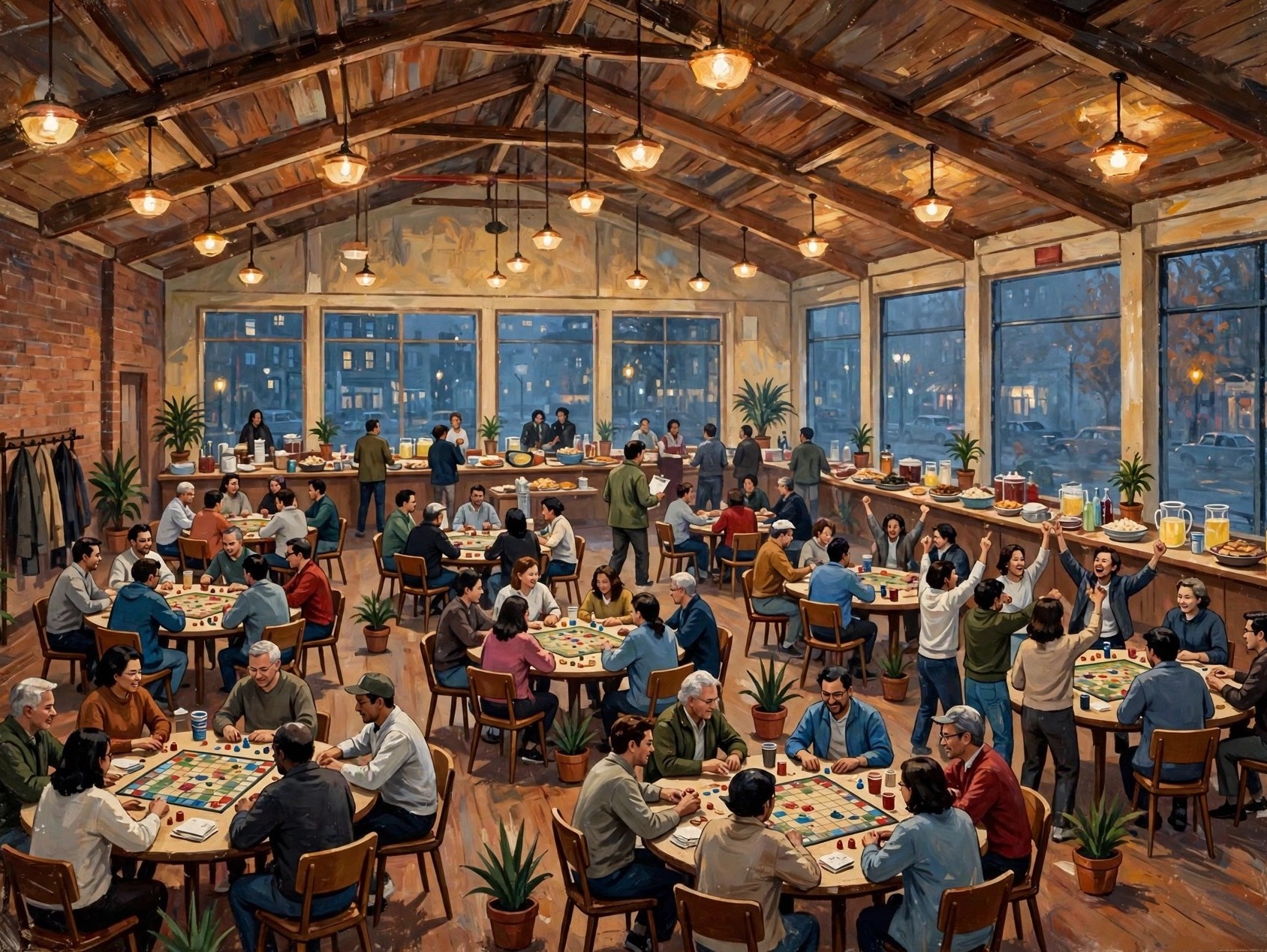
Game night
Creative programming: game nights build trust
Salsa night
Salsa nights — community through movement
Planning with sticky notes
From dinners to structured communities of practice

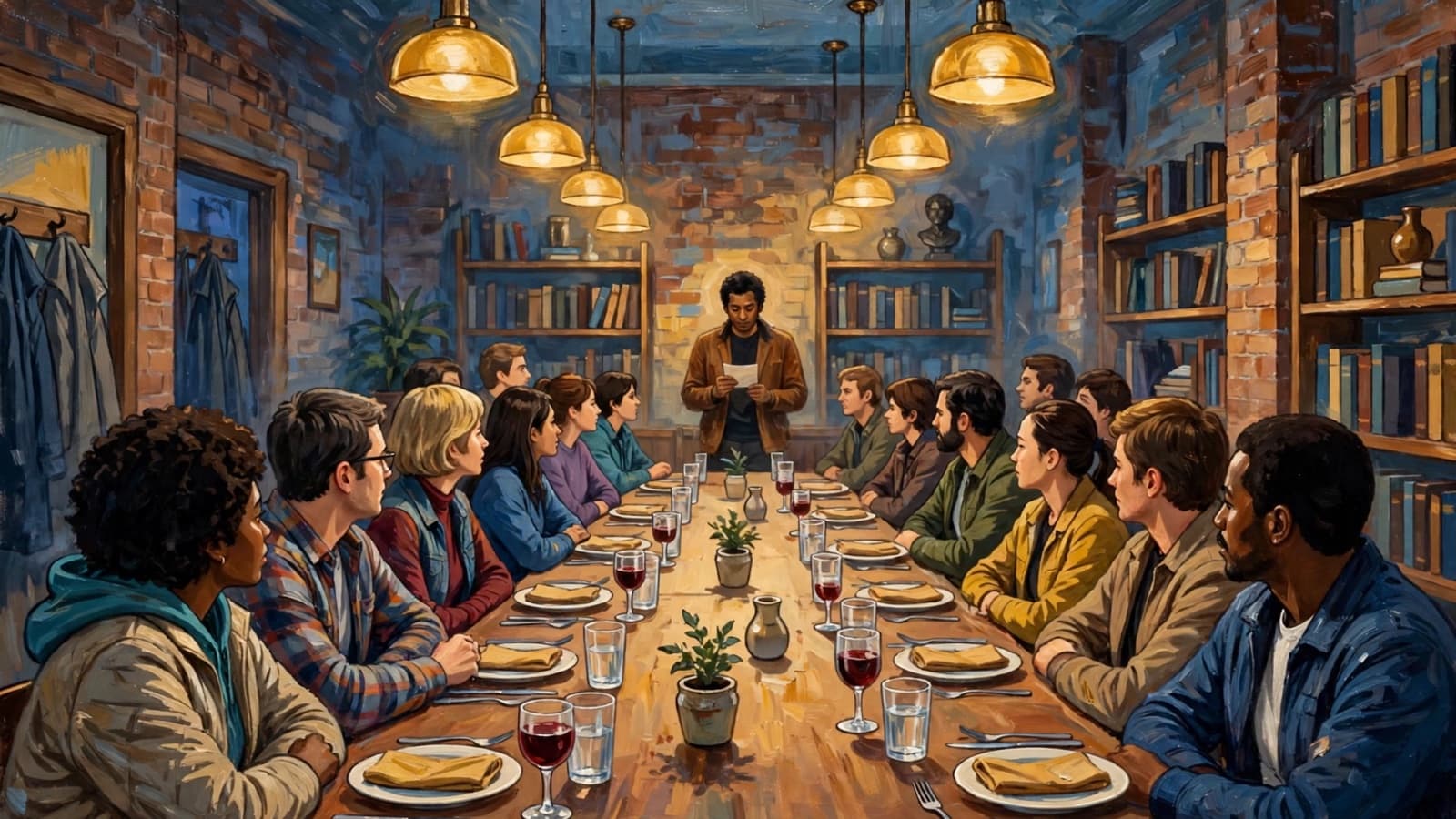
It starts with a dinner. Not a gala with rubber chicken and keynote speakers. A real dinner — a potluck in a borrowed church basement, a cookout in someone's backyard, a pizza night in a community center that someone secured for free because they know the facilities manager.

The guest list is curated but never exclusive. People working on homelessness come to one dinner. Education practitioners come to another. Youth development, workforce training, public health, immigrant services — each “vertical” gets its own gathering. The cost is kept near zero. The vibe is warm, intimate, honest. There are no panels. There are no sponsors. There are no name tags with corporate logos. Just people who care about the same thing, sitting at a table together for the first time.

Think of it like AA for leaders — grassroots, scrappy, no fancy spaces needed. Just real people, real conversations, and the radical act of showing up for each other.

At these dinners, something remarkable happens. The shelter director meets the social worker meets the policy researcher — and they realize they have been solving the same problem from different angles without ever talking to each other. The education reformer discovers that the youth pastor down the street has been running a tutoring program for years. Connections form that should have existed all along.

Within each vertical, natural leaders emerge. Not the loudest voices — the most trusted ones. The people others instinctively turn to. These natural leaders are given simple tools — a facilitator guide, a suggested meeting cadence, a WhatsApp group template — and empowered to launch their own communities of practice.

A community of practice is a small group — eight to fifteen people — who meet every two weeks to share what they are learning, troubleshoot challenges, and hold each other accountable. They can meet anywhere: a coffee shop, a park bench, someone's living room. Each community becomes a self-sustaining cell of leadership development, multiplying because the model is simple enough for anyone to run.

The Model

Low-cost community dinners and potlucks across verticals — homelessness, education, youth development, workforce training. Free spaces. AA-style scrappy. Find natural leaders. Give them templates. Seed communities of practice that multiply on their own. The overhead is near zero. The impact compounds.

Planning and scaling
04

Chapter 04

Phase Two: Scale

AI-powered coordination and the emergence of elite leaders

04

2027–2028 · Phase Two

From Dozens to Hundreds

10+

Verticals

100s

Leaders Connected

50+

Communities of Practice

1%

Elite Leaders Emerge

By Phase 2, the model is proven. Communities of practice are running in three or four verticals. The facilitators are experienced. The word is spreading organically — because when you create something genuinely valuable for people who are chronically underserved, they talk about it. They bring their colleagues. They ask when the next event is happening.

Phase 2 is about deliberate, systematic expansion. New verticals are launched: criminal justice reform, affordable housing, mental health, arts and culture, small business development, environmental justice. Each new vertical is seeded the same way — a curated dinner, follow-up events, and the identification of natural leaders.

This is where technology becomes essential. AI-powered tools handle the coordination that would otherwise require a large staff. Matching algorithms connect people across verticals who should know each other. Automated systems manage event logistics, track participation, and surface insights. Personalized outreach reaches the right people at the right time.

The human touch stays human. The logistics become automated. The result is a network that grows faster than any single person could manage — but still feels intimate.

And then something extraordinary begins to happen. Across hundreds of community interactions — dinners, meetings, workshops, informal conversations — a pattern becomes unmistakable. Certain people stand apart. Not because they seek the spotlight, but because they cannot help but lead.

These are the one-in-a-hundred leaders. The woman running a youth mentorship program out of her apartment who could, with the right backing, scale it citywide. The formerly incarcerated man who runs reentry programs and has the trust of both the justice system and the communities it failed. They lift everyone around them. They see problems others miss. They build bridges between worlds that do not normally talk.

Mentorship in action
One-in-a-hundred leaders emerge through community — not through applications
The future Academy space
05

Chapter 05

Phase Three: The Academy

A physical headquarters for the movement

05

2029–2030 · Phase Three

From Digital Network to Physical Home

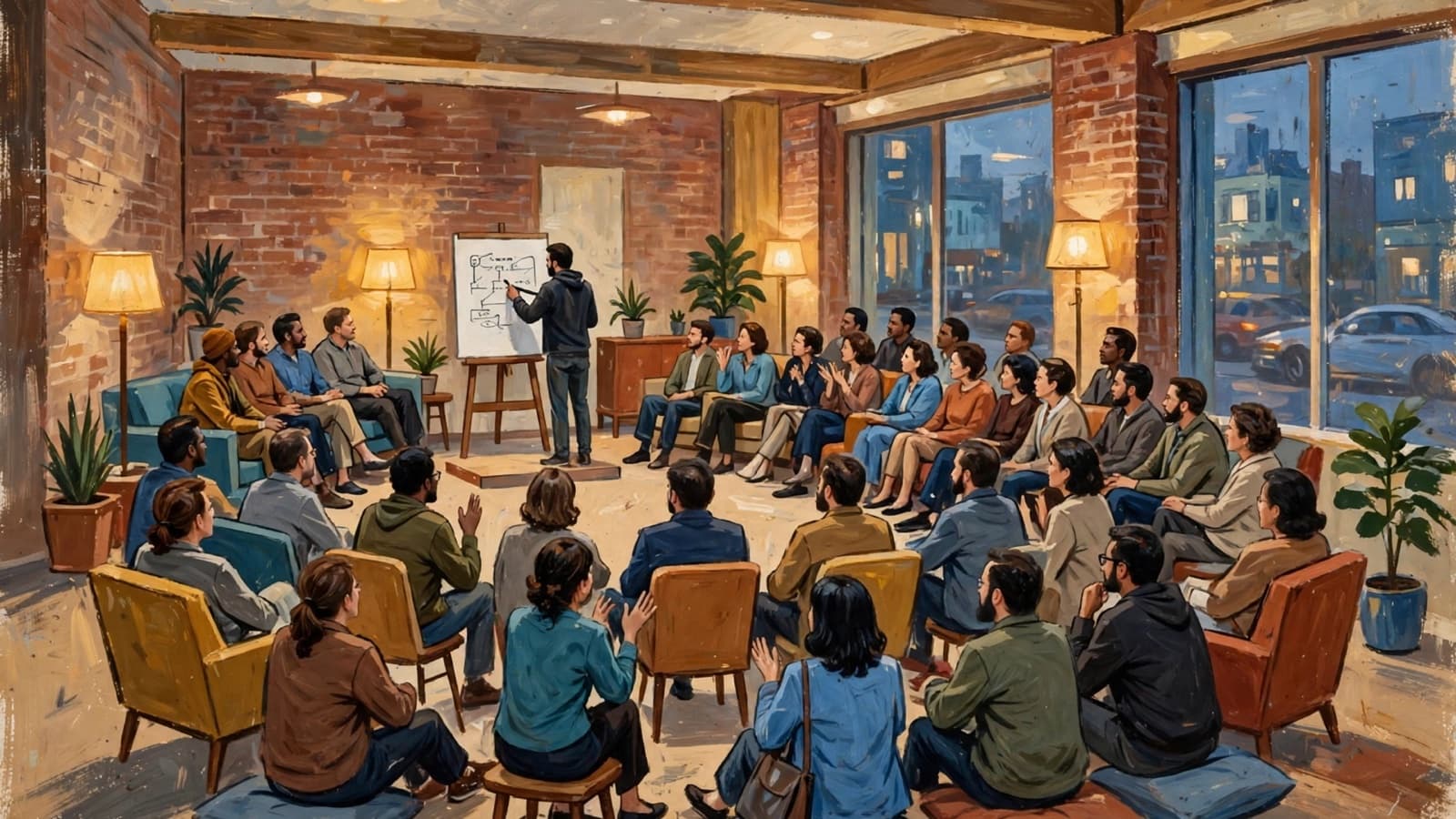
Leadership intensive
Leadership intensives and structured development
The Academy space
A space designed for serendipitous collisions

By Phase 3, No Tribe has proven something important: there is massive, unmet demand for what it offers. The communities of practice are thriving. The cross-sector connections are generating real collaboration. And an online training platform — built on the lessons, frameworks, and case studies that emerged from years of community building — is generating the revenue needed for the next leap.

That leap is a physical space. Not a sterile coworking office with fluorescent lights and motivational posters. Not a conference center you rent by the hour. Something new — a place designed from the ground up for the kind of serendipitous collisions, deep relationships, and focused development that transform good leaders into great ones.

Part social impact club, part leadership academy, part incubator — the No Tribe Academy is unlike anything that exists today.

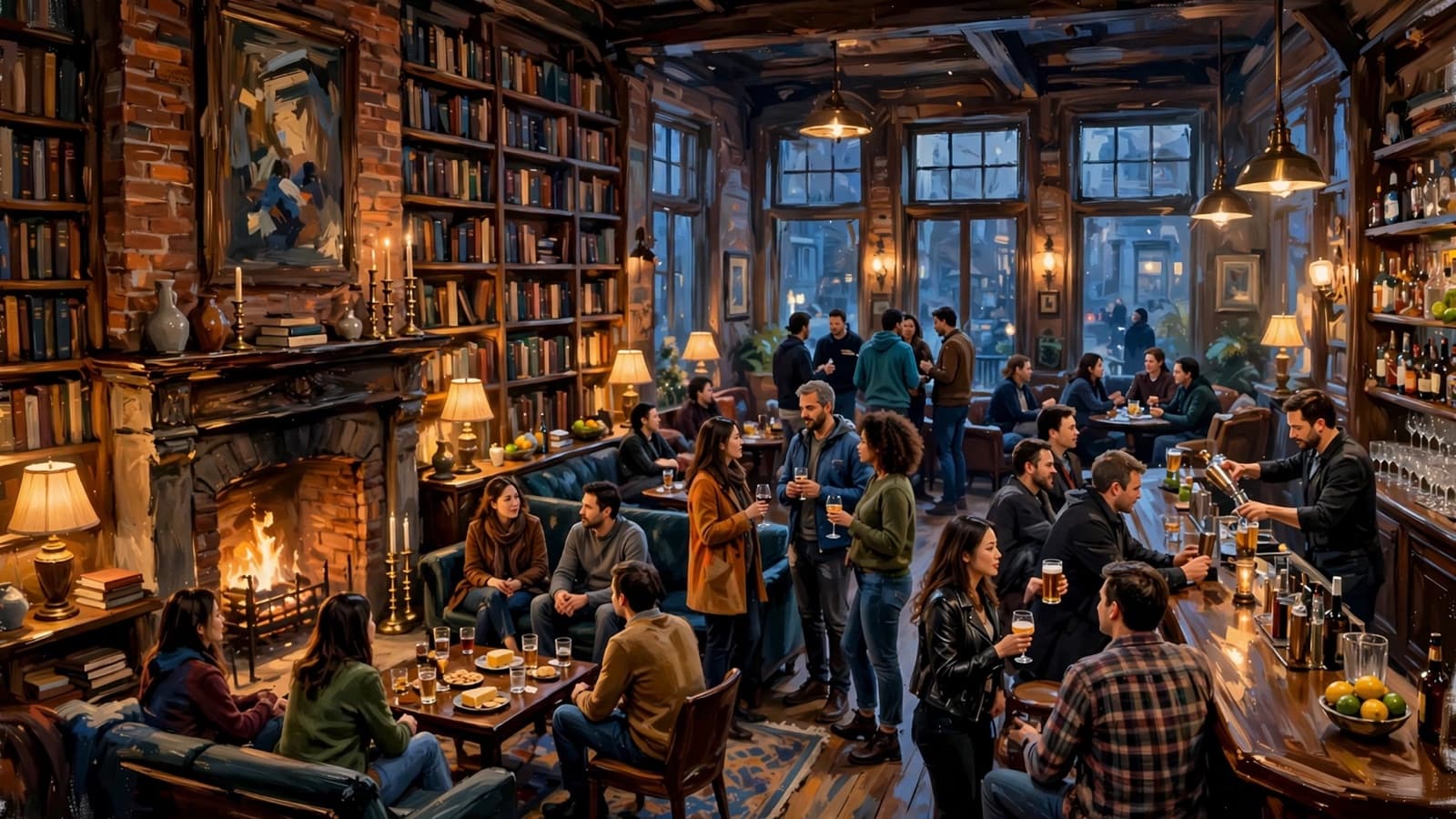
Imagine walking into the Academy on a Tuesday morning. In one corner, a homelessness advocate is having coffee with a tech entrepreneur — they met here last month and are now collaborating on a data platform for shelter intake. In the main room, a cohort of emerging leaders is halfway through a twelve-week leadership intensive. In the library, a city council staffer is reviewing a policy brief written by three Academy members who come from different sectors but converged on the same solution.

The founding members of the Academy are the elite leaders identified through years of community building — the one-in-a-hundred from Phase 2. They are not selected by resume or pedigree. They are selected by track record and character, by the testimony of the people they have served and the peers they have supported. They set the tone, the culture, and the standards. Getting this founding cohort right is everything.

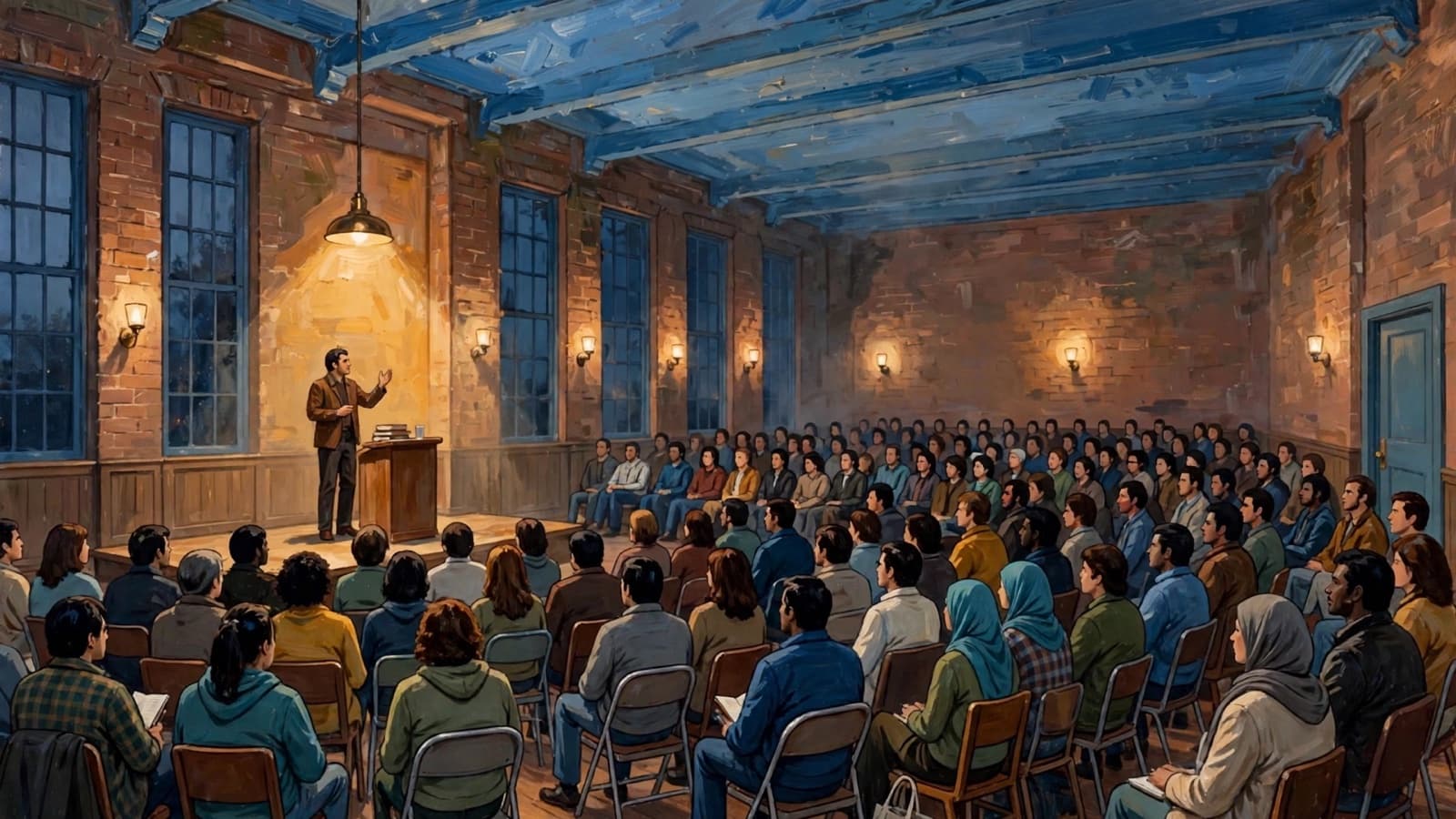
The Academy offers structured programming: leadership intensives, cross-sector problem-solving workshops, mentorship pairings between veteran and emerging leaders, and an annual fellowship for exceptional individuals. But the real magic is in the unstructured time — the late-night conversations, the spontaneous collaborations, the “wait, you know someone at the housing authority too?” moments that no program can engineer but the right environment makes inevitable.

The founding members set the culture. Getting this cohort right is everything — and that is why we spend years building the pipeline before opening the doors.

Community service and global impact
06

Chapter 06

2031 and Beyond

From one city to a global network of leadership ecosystems

06

The Long View

City by City, One Dinner at a Time

2031

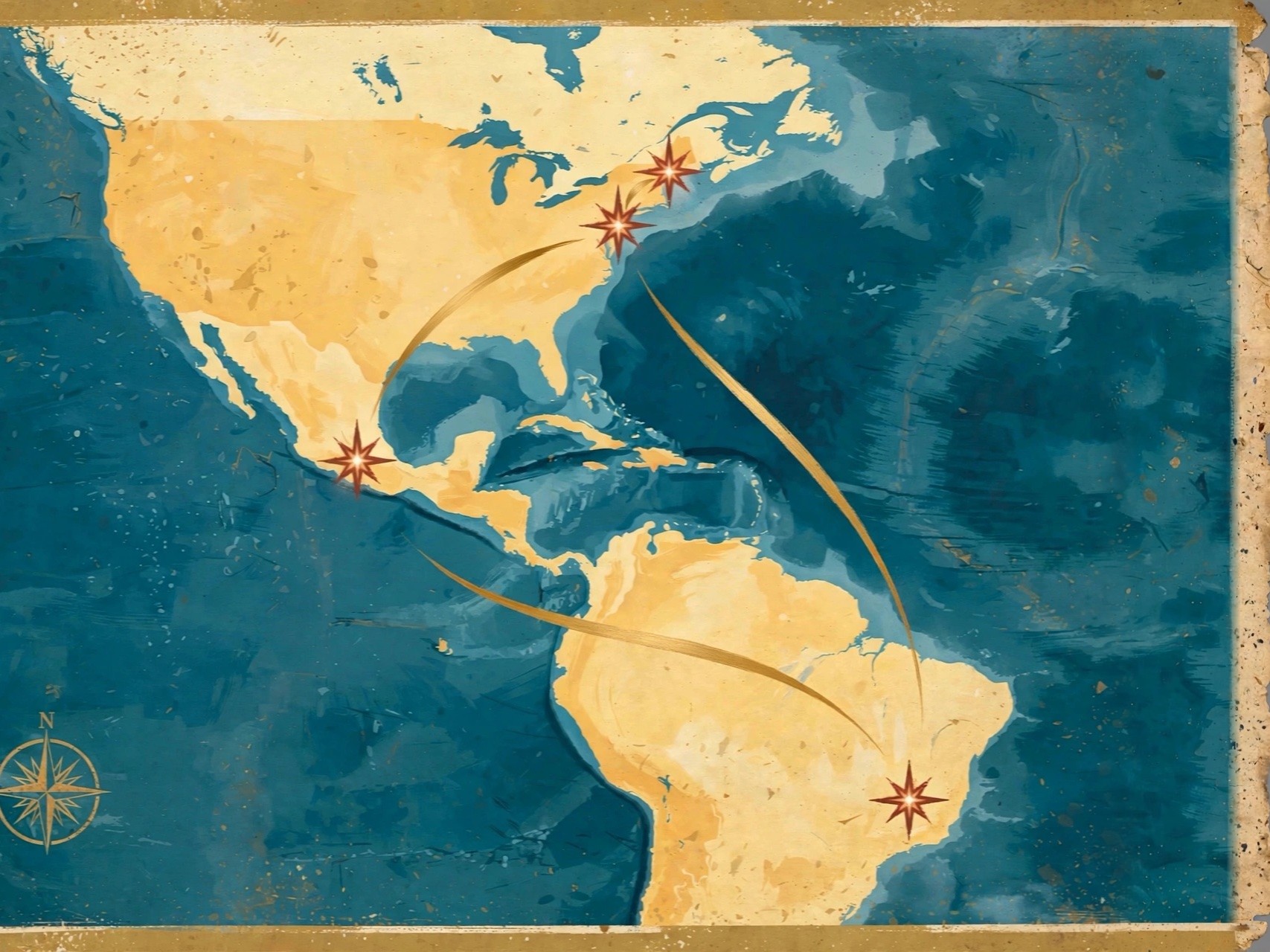
In 2031, No Tribe Academies open in two cities: Washington, D.C. and Mexico City. Two cities on the same continent but with vastly different contexts — proving that the model is adaptable, not just replicable. In each city, hundreds of the most competent, trustworthy leaders are connected, coordinated, and actively developing the next generation.

The proof of concept is complete. The model works. And the playbook is ready to travel.

After D.C. and Mexico City, No Tribe expands city by city. Each new city starts at Phase 1 — dinners, events, communities of practice — but benefits from the accumulated wisdom, tools, and network of every city that came before. A leader in Lagos can learn from a leader in D.C. A community of practice in Bogota can adapt a framework that worked in Mexico City.

The vision is not one organization doing everything everywhere. It is an international network of local ecosystems — each rooted in its own cultural context, each responsive to its own community's needs, but each connected to the whole.

A global movement built from the ground up. One dinner at a time. One leader at a time. One city at a time.

No Tribe

Be Part of the Story

The first chapter is being written now

We are looking for leaders, collaborators, and believers who want to build something that lasts longer than any of us.

peter.elam@notribe.org
© No Tribe, 2026. All rights reserved.